
Nothing Changes If Nothing Changes
I was catching up with a friend recently who worked in a family-owned automotive business for many years. Like many family businesses, they’ve always taken pride in their blue-collar roots and “loyal to a fault” culture.
Over the years, she confided in me many times about the dysfunction a particular member of the family brought to the business—constant drama, resisting accountability, and stirring up tension that weighed on everyone. Employees walked on eggshells around him. She spent more time cleaning up the emotional wake than doing her job. The owners tolerated him in order to preserve the family peace. She loved her job and the family, but couldn’t get past this one individual.
But during this conversation, she had news: he’d finally left the business.
There was relief in her voice—but also exhaustion. “Now I’m dealing with all the mess he left behind,” she said, listing financial issues, broken trust among the team, and unresolved conflicts.
I listened, and then reminded her: “Nothing changes if nothing changes.”
Yes, the transition is messy. But the chronic stress she endured—constantly trying to maintain peace, keep the business afloat, and avoid family fallout—was far more damaging in the long run. Now, for the first time in years, she’s in a position to help the owners rebuild something stronger, more sustainable, and more aligned with their vision.
The Trap of Tolerating the Familiar
In my work with leadership teams, I see this pattern all the time: people want things to get better, but they don’t want to rock the boat. They tolerate misalignment, poor communication, or underperformance because change feels disruptive—and let’s be honest, it is.
But what we forget is that not changing is also disruptive. It drains energy, lowers morale, and stifles growth.
The Hope Trap: Wishing Without Action
Teams often fall into what I call the “hope trap.”
They hope someone will magically start pulling their weight.
They hope the tension will dissolve without a conversation.
They hope things will improve over time.
They hope that over time, the discomfort will just… disappear.
But hope is not a strategy.
Eventually, one of two things happens:
- The team makes an intentional decision to change.
- Or things become so painful, they’re forced to.
One path is proactive. The other is reactive. Both come with a cost—but only one puts you in control.
Change is Messy—but Worth It
When leaders finally face the tough decisions—whether it’s redefining roles, letting go of someone who’s misaligned, or shifting a long-standing process—it can feel like everything is unraveling.
But often, it’s not unraveling. It’s rebuilding.
You’re just finally dealing with what’s been silently costing you all along.
Questions for Teams Ready to Grow
If your team is stuck, ask yourself:
What are we tolerating that’s keeping us from growing?
What pain are we choosing, simply because it’s familiar?
And what might be possible if we were willing to make the hard, intentional change?
Because nothing changes if nothing changes.
And discomfort is inevitable—so why not choose the kind that leads to progress?
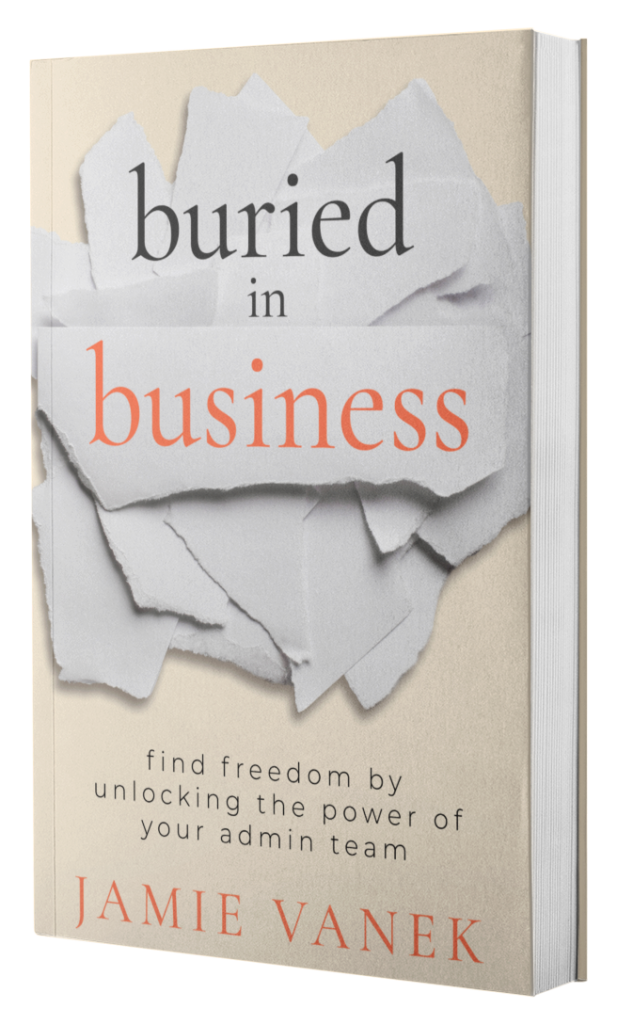
Ready to grow? Grab your copy of Buried in Business!